Research
We use fungi to study the pattern and process of evolution, and apply that knowledge to problems in human health, agriculture and the built environment.
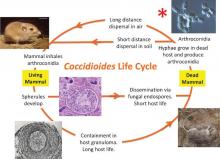
San Joaquin Valley Fever is a human disease caused by the fungus, Coccidioides immitis. This fungus and it’s sister species, Coccidioides posadasii, are found in hot, dry regions from the San Joaquin Valley of California, through Southern California, Arizona, New Mexico, Texas, Mexico, Central America and South…
Read more about Valley Fever
Fungi are found throughout the environment, including the air. Outdoors, there is about one fungal spore per liter and we breathe ca. 11,000 liters of air each day. Outdoors, therefore, you breathe in ca. 11,000 spores each day. Buildings reduce the amount of fungi and, in a well-constructed and maintained building,…
Read more about Indoor air and water damaged homes
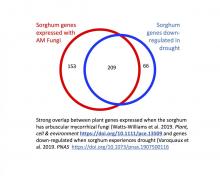
Sorghum (Sorghum bicolor) is a grass closely related to sugarcane (Saccharum) and corn (Zea mays). It is the fifth most important cereal crop, globally and its use is increasing due to its ability to resist drought. We are studying the role that fungi play in sorghum’s drought resistance and initiated our studies with…
Read more about Sorghum, drought and fungi
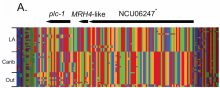
To highlight one of our basic projects, we have used population genomics to find genes involved in adaptation of newly diverged populations, a first for a microbe. We call our approach, reverse-ecology. We started with a group of 50 genomes and found that there were two populations in the group and one of them was…
Read more about Reverse-Ecology by Population Genomics
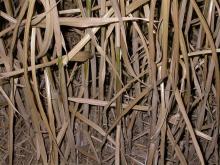
Read more about Fungi for Biofuels
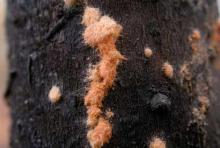
We use fungi to study the basic pattern and process of evolution and how that knowledge can be translated to address social problems. Using the tool of population genomics, our basic research aims to use the model Ascomycota fungus Neurospora to understand how newly diverged populations adapt to differences in the…
Read more about Evolution of Fungi
Earlier Projects
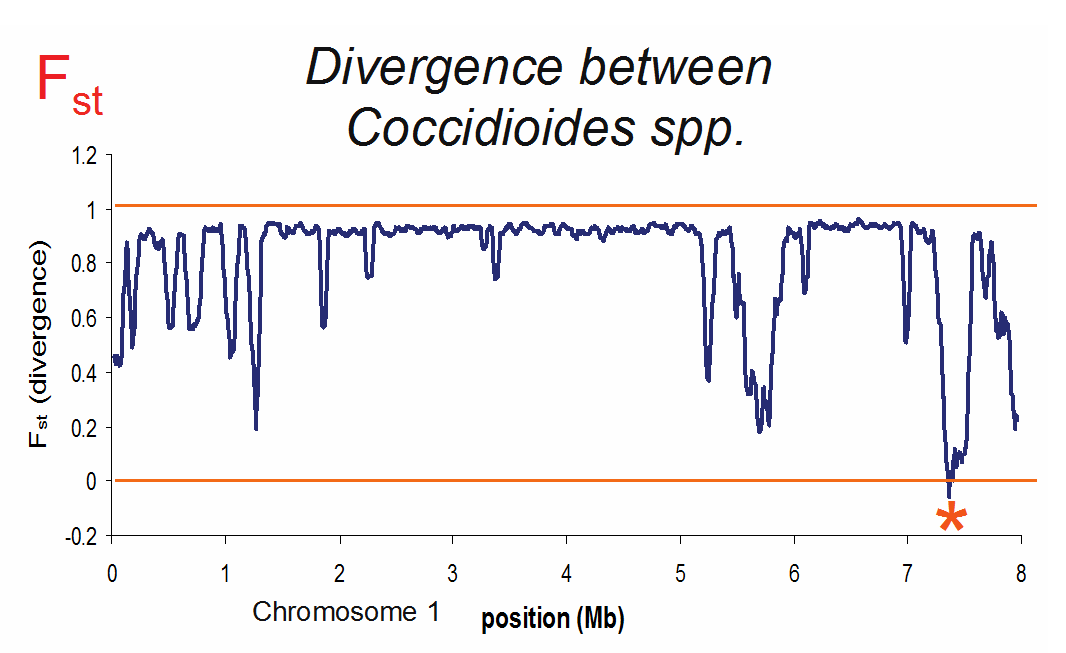
Population genomic studies of populations of both Coccidioides species and Neurospora crassa have revealed significant introgression. With Coccidioides, as much as 7% of the genome of C. immis can be traced to its sister species, C. posadasii Neafsey et al. 2010. One of the introgressed regions has the hallmarks of a…
Read more about Introgression, a Major Contributor to Fungal Genetic Variation found by Population Genomics.
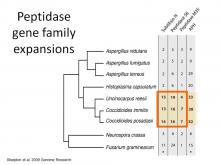
The wealth of sequenced fungal genomes has enabled comparative phylogenomics and these comparisons have found that fungi can adapt to new environments by changing the size of gene families. The ancestral state of fungal nutrition to eat plants, so we compared the genomes of several “green” fungi, those that eat…
Read more about Adaptation by Gene Family Expansion or Contraction? Phylogenomics.
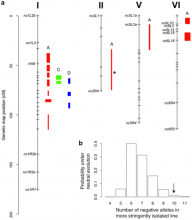
Neurospora crassa individuals acting as females in southern India are faced with local suitors from their own species and from a sister species, N. intermedia. We wanted to know if “she” has a choice in the matter because fungi, in general, mate first and then ask if it was a good idea. It turns out that she does,…
Read more about Mate Choice in a Microbe? QTL analysis.
| | | | — | — | | Title | Nuclear and genome dynamics in multinucleate ascomycete fungi | | Publication Type | Journal Article | | Year of Publication | 2011 | | Authors | Roper M, Ellison C, Taylor JW, Glass NL | | Journal | Current biology : CB | | Volume | 21 | | Issue | 18 | | Pagination | R786-93 | | Date…
Read more about Nuclear and genome dynamics in multinucleate ascomycete fungi