Anne Pringle
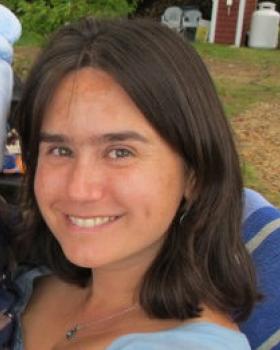
- Postdoctoral Fellow
Anne Pringle joined the Taylor lab in August of 2001. She is interested in the ecology and genetics of arbuscular mycorrhizal fungi, non-Mendelian genetics, and the application of basic evolutionary principles to microorganisms.
Anne left the Taylor lab in June of 2005 and is currently a professor of Organismic and Evolutionary Biology at Harvard.
Education
- Ph.D. Botany and University Program in Genetics, Duke University. 2001.
Awards
- Perry Prize, Best Dissertation, Biology Department, Duke University. 2001.
- Best Student Paper, Soil Ecology Section, Ecological Society of America Annual Meeting. 2000.
Fellowships
- Miller Institute for Basic Research in Science Post-doctoral Fellowship, UC Berkeley. 2001-2004.
- National Institutes of Health Graduate Fellowship in Genetics at Duke University. 1995-1997.
Grants
- National Science Foundation Doctoral Dissertation Improvement Grant. $10,367. Asexuality and parasitism in arbuscular mycorrhizal fungi. 1998-2000.
- Lawrence J. Giles Phytotron Award. $2,400. Contraints on parasitism within mutualism. 1998.
- Duke Botany Dept. Phytotron Award. $2,000. Contraints on parasitism within mutualism. 1998.
- Lawrence J. Giles Phytotron Award. $1,000. Genetics of A. colossica, an AM fungus. 1997.
- Catherine Keever Research Award. $1,000. Genetics of A. colossica, an AM fungus. 1997.
- Andrew W. Mellon Travel Grant. $810. Mycorrhizal colonization in disturbed habitats (Cuba). 1996.
- Catherine Keever Research Award. $1,260. To support travel to Cuba. 1996.
- Bodega Bay Field Conferences Graduate Student Research Award. $406. Specificity between Bradyrhizobium spp. and Lupinus spp. 1993.
Journal Publications
- Pringle, A., D.M. Baker, J.L. Platt, J.P. Wares, J.P. Latge and J.W. Taylor. 2005. Cryptic speciation in the cosmopolitan and clonal human pathogenic fungus Aspergillus fumigatus. Evolution 59(9): 1886-1899.
- Rowe, A. R. and A. Pringle. 2005. Morphological and molecular evidence of arbuscular mycorrhizal fungal associations in Costa Rican epiphytic bromeliads. Biotropica 37(2): 245-250.
- Dettman, J. R., Jacobson, D. J., Turner, E., Pringle, A., Taylor, J. W. 2003. Reproductive isolation and phylogenetic divergence in Neurospora: Comparing methods of species recognition in a model eukaryote. Evolution 57(12): 2721-2741.
- Pringle, A., D. Chen and J.W. Taylor. 2003. Sexual fecundity is correlated to size in the lichenized fungus Xanthoparmelia cumberlandia. Bryologist 106(2): 221-225.
- Pringle, A., J.W. Taylor. 2002. The fitness of filamentous fungi. Trends in Microbiology. 10(10): 474-481.
- Anne Pringle and James D. Bever. 2002. Divergent phenologies may facilitate the coexistence of arbuscular mycorrhizal fungi in a North Carolina grassland. Am. J. Bot. 89: 1439.
- Bever, J. D., P. A. Schultz, A. Pringle, and J. B. Morton. 2001. Arbuscular mycorrhizal fungi: More diverse than meets the eye, and the ecological tale of why. Bioscience. 51:923-931.
- Pringle A., J.M. Moncalvo, R. Vilgalys. 2000. High levels of variation in ribosomal DNA sequences within and among spores of a natural population of the arbuscular mycorrhizal fungus Acaulospora colossica. Mycologia 92: 259-268.
- Sniegowski P.D., A. Pringle, K. Hughes. 1994. Effects of autosomal inversions on myotic exchange in distal and proximal regions of the X-chromosomes in a natural population of D. melanogaster. Genetical Research 63: 57-62.
Book Chapter
- Bever, J.D., A. Pringle, P. Schultz. In press. Dynamics within the plant-arbuscular mycorrhizal fungal mutualism: testing the nature of community feedback. In Mycorrhizal Ecology, ed. M. van der Heijden and I. Sanders. Springer-Verlag: Heidelberg.
Book Review
- Pringle A., L.C. Moyle, J. MacLachlan, J. HilleRisLambers. 2000. Philosophy and biology: a review of Sex and Death. Complexity 5: 44-45.
Talks (Partial List)
- The ecology of mutualism. Department of Plant Pathology, University of California at Davis. (Invited speaker)
- The ecology of mutualism. Microbial Biology Seminar Series, University of California at Berkeley. (Invited speaker)
- Winners never cheat; cheaters never win: species’ flexibility and the symmetry of benefit within a mutualism of arbuscular mycorrhizal fungi and plants. Annual meeting of the Ecological Society of America.
- Exploring an underground universe: the ecology and odd genetics of arbuscular mycorrhizal fungi. Elon College Biological Honor Society. (Invited speaker)
- Exploring an underground universe: the ecology and odd genetics of arbuscular mycorrhizal fungi. Carleton College Department of Biology. (Invited speaker)
- Transitions between mutualism and parasitism. Annual meeting of the Society for the Study of Evolution. (Invited speaker: companion session to “Evolutionary Biology of Host-Parasite Systems”.)
- Spatial patterns of plant, bacterial and AM fungal communities of an old field. Annual meeting of the Ecological Society of America.
- Unusually high levels of genetic variation in an asexual AM fungus, Acaulospora colossica. Annual meeting of the Society for the Study of Evolution.
- AM fungi: the role of soil organisms in plant ecology. Annual meeting of the National Association of Biology Teachers National Convention.