We use fungi to study the basic pattern and process of evolution, and apply that knowledge to social problems: the Valley Fever fungus Coccidioides, fungi in water-damaged homes, and the fungi that help sorghum survive drought.
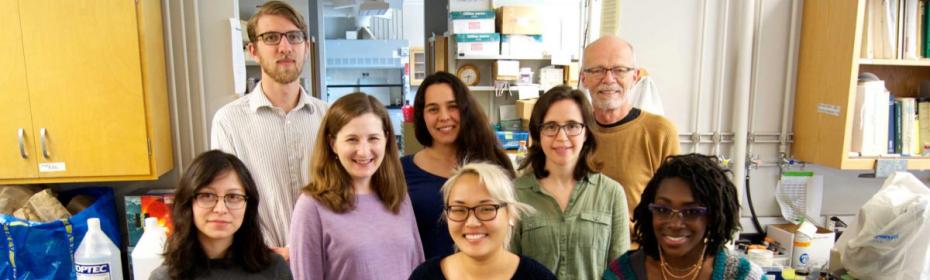
The lab is led by John W. Taylor in the Department of Plant & Microbial Biology at UC Berkeley.
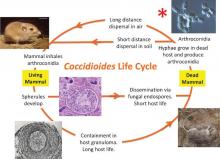
San Joaquin Valley Fever is a human disease caused by the fungus, Coccidioides immitis. This fungus and it’s sister species, Coccidioides posadasii, are found in hot, dry regions from the San Joaquin Valley of California, through Southern California, Arizona, New Mexico, Texas, Mexico, Central America and South…
Fungi are found throughout the environment, including the air. Outdoors, there is about one fungal spore per liter and we breathe ca. 11,000 liters of air each day. Outdoors, therefore, you breathe in ca. 11,000 spores each day. Buildings reduce the amount of fungi and, in a well-constructed and maintained building,…
Sorghum (Sorghum bicolor) is a grass closely related to sugarcane (Saccharum) and corn (Zea mays). It is the fifth most important cereal crop, globally and its use is increasing due to its ability to resist drought. We are studying the role that fungi play in sorghum’s drought resistance and initiated our studies with…
To highlight one of our basic projects, we have used population genomics to find genes involved in adaptation of newly diverged populations, a first for a microbe. We call our approach, reverse-ecology. We started with a group of 50 genomes and found that there were two populations in the group and one of them was…